
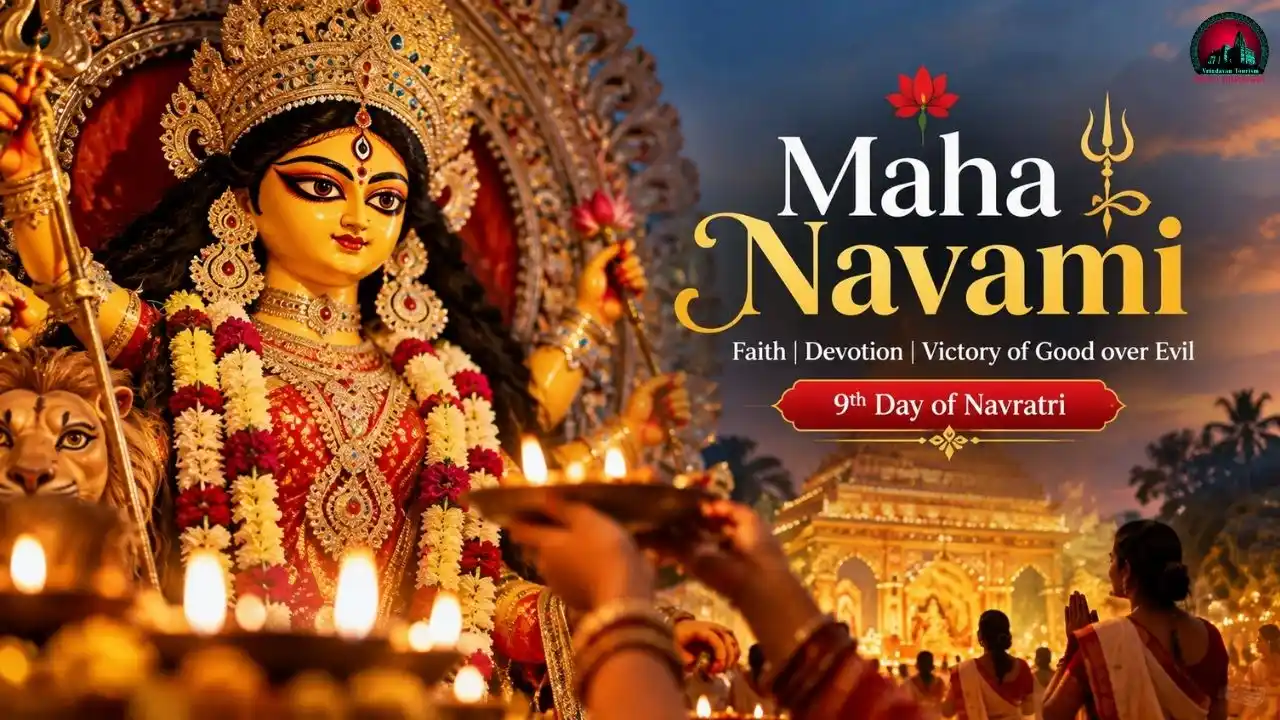
Maha Navami 2026 will be observed on Monday, October 19. It falls in the last segment of Shardiya Navratri. The ninth day of Navratri is considered as one of the most auspicious days for the worship of Goddess Durga. Devotees worship goddess Maa Siddhidatri, the ninth incarnation of NavDurga on this day, whereas as a major day of worship of Goddess Durga, Bengali Durga Puja traditions observe Maha Navami.
Maha Navami Puja on September 25, is only one thing that devotees should think about. The actual Navami Tithi, local sunrise time, the best time for the Puja (Muhrat), Kanya Pujan (tradition of worshipping a small girl as a deity) and the customs in particular region all are relevant as well. For instance, in New Delhi, theNavami Tithi starts on 10th September 2026 at 12:49 PM, and gets over at 1:22 PM of following date. The Tithi that falls between two dates, therefore, Maha Ashtami and Maha Navami observances will have their own special requirements during 2026.
Maha Navami 2026 Date and Time
The most important information for Maha Navami 2026 is given below:
|
Detail
|
Maha Navami 2026
|
|
Maha Navami Date
|
Monday, October 19, 2026
|
|
Navami Tithi Begins
|
10:51 AM, October 19, 2026
|
|
Navami Tithi Ends
|
12:50 PM, October 20, 2026
|
|
Paksha
|
Shukla Paksha
|
|
Hindu Month
|
Ashwin
|
|
Day
|
Monday
|
|
Navratri Goddess
|
Maa Siddhidatri
|
|
Important Puja
|
Maha Navami Puja
|
|
Other Rituals
|
Kanya Pujan, Havan, Bhog, Aarti
|
|
Following Festival
|
Vijayadashami / Dussehra
|
Important: Tithi timings can vary by location. The timings above are based on New Delhi calculations, so devotees in other cities should follow their local Panchang for exact ritual timings.
When Is Maha Navami 2026?
Maha Navami 2026 falls on Monday, October 19, 2026.
A part of the 9-day festival Navratri which concludes with Vijayadashmi or Dushereha, it is the last day.
However, 2026 has an important Tithis' detail. The Navami tithi does not run the entire day. It will start at 11:27 AM on October 21 2023 and finish up at 10:23 AM next day at New Delhi.
In that regard, one may search words like
- Maha Navami 2026 date
- Mahanavami date 2026
- Navami Tithi 2026, or
- Maha Navami October 19 or 20
which could be very ambiguous and misleading if the lunar tithi is not separated from the actual festival date.
Why Maha Navami Will Still Be a Major Event in 2026
Maha Navami is the last day of the festival and symbolizes the end of Devi's nine-day worship at the time when Shardiya Navratri is performed.
On different days of different Hindu traditions there are minor differences in ritual focus.
According to the Navdurga tradition, the ninth day is consecrated to Goddess Siddhidatri.
The day of Maha Navami in Durga Puja has a very unique form, as Goddess Mahishasuramardini the one who crushed Mahisha demon appears. Thus it has an even bigger aspect of celebrating Durga on this occasion. That day, for example, one of them is the victorious form of Durga as Mahishasuramardini, and hence the celebration is unique.
Therefore the day brings these different aspects together:
- Deification of the Feminine
- Triumph of the good over evil
- Purifications in a spiritual form
- Worship for Navratri's completion
- Kanya Pujan
- Navami Havan
- Bhog and Aarti
- Getting ready for Vijayadashami
Maha Navami 2026 Tithi
The Navami Tithi is the lunar ninth day of Shukla Paksha.
For New Delhi:
Navami Tithi begins: 10:51 AM on October 19, 2026
Navami Tithi ends: 12:50 PM on October 20, 2026
This distinction is particularly important because Hindu festival dates are calculated using the lunar calendar rather than simply changing at midnight.
Maha Navami 2026 and Maha Ashtami: Why the Dates Can Be Confusing
A key issue associated with Navratri in 2026 is the possibility of Maha Ashtami and Maha Navami being on the same day.
The confusion arises because Tithis do not cover a full Gregorian calendar day.
That is why at a specific hour in a day the previous Tithi ends and the next Tithi starts.
The transition of Navami starts at October 19 2026 from time 10:51 PM, hence this switch is going to happen at the very hour of the day.
Thus the different calculation methods (regional, calendars etc.) explain the difference of the shown dates on one platform from the other.
When it comes to the main rituals like Kanya Pujan, Havan and Navami Puja the safe option is sticking to the family's tradition, besides following the localPanchang that is used.
Which Goddess Is Worshipped on Maha Navami?
Maa Siddhidatri
According to the Navdurga tradition, Maa Siddhidatri is worshipped on the night of the ninth day of Navratri.
Durga appears as this last form during Navratri which is considered the final phase of her manifestation.
The literal translation of the word Siddhidatri is one who possesses spiritual accomplishments and perfection is bestowed on the devotee by the divine being. The goddess name derives from the words Siddhi meaning spiritual achievements/perfection, and Dattaa means a giver.
In the worship of Maa Siddhidatri, it is believed by the worshippers that through the blessings of the goddess, we get:
- Fruit of Spirit
- Mental Strength
- Completion of desires, wishes, and dreams
- Grace from Lord/ the Goddess
- Lucid mind
- Progress in spiritual work
The worship of Siddhidatri is completed thus bringing together the nine forms of Shakti in Shaktism or nine forms of Durga in Durga Navratri. In conclusion, the different Goddess forms are worshipped each night during Durga Navratri representing the different facets of Shakti or feminine power.
Maha Navami as Mahishasuramardini
Durga Puja traditions associate Maha Navami with a somewhat different but also closely related theme.
Durga is worshipped here in the form of Mahishasuramardini, the celestial warrior who slew the demon, Mahishasura.
Mahishasura, therefore, should not only be looked at as the mythological enemy but his defeat can also be seen symbolically as the victory of:
righteousness over the unrighteous, knowledge over the un-informed, strength over fear, goodness over the destructiveness.
The above-mentioned symbolic meanings are also the main reasons that make Maha Navami meaningful not only spiritually but even through its elaborate rituals.
Maha Navami 2026 Puja Methods
A conventional Maha Navami Puja can be comprised of several procedures. The actual step-by-step depends heavily on region, religious sect, and family heritage.
The basic way to celebrate the festival at home is outlined below.
1. Purification of the place of Puja
It all starts with cleaning the place where a photo of Goddess Durga or a statue of Goddess Siddhidatri is displayed.
After a clean cloth is laid on the puja table, a picture or idol is placed there.
2. Bath and wear a new cloth
A typical custom among the worshippers is to wash themselves before the day starts to pay respects to the Divine and wear pure clothes.
It has become common for families to wear red, yellow or other good omens of color during Navratri, though this custom of being in one particular color clothes for everyone is not mandatory.
3. Collecting Items for the Puja
Besides keeping your heart pure and your mind serene, prepare the needed items of worship before performing the Puja.
Frequently offered items are:
- Flowers
- Kumkum
- Rolie
- Akshat
- Incense sticks
- Diya
- Ghee or oil
- Fruits
- Coconut
- Sweetmeat
- Prasad
- Water
- Kalash, wherever it is applicable
- Bhog or Naivedyam
4. Turning on the light of the Diya
You have light the diya and the incense sticks first before you worship to set the atmosphere.
The lit flame symbolizes bringing light that dispels every sort of darkness.
5. Sankalp
As a usual practice, the devotees make Sankalp to declare the purpose of offering Maha Navami Puja devotedly. The devotees also expect the Grace of the Mother Goddess.
6. Worshippers offer a prayer to Mother Goddess or Goddess Durga
Offering a garland of flowers, red kumkum, the sacred white rice, the incense sticks, the diya, and a fruit plate is one thing.
In addition, the devotees chant one or several of the following:
- Durga Chalisa
- Durga Saptasati
- Nav Durga mantras
- Maa Siddhidatri Chanting the mantras
- Traditional prayers in a family
7. The Worship of the Young One (Kanya Pujan)
It may happen that the family follows a specific ritual of Kanya Pujan on either Ashtami or Navami. If this is the case, they go with the flow as per their family culture.
8. Doing a Havan on the occasion of Navami
A Havankund is performed at the very end of the Puja by some traditional people.
Apart from the fact that these people follow the vedics or different local customs, it's the priest or family that will prescribe that specific method.
9. Bhog to a God
They are to make it sattvic, i.e., pure to offer as Bhog.
10. The Aarti of the Divine
It ends with Goddess Durga Aarti and a share of Prasad.
Kanya Pujan on Maha Navami 2026
Besides being very well-known, the custom of Kanya Pujan is an inseparable part of Navratri in the North Indian culture.
In different parts of the country it has several names such as:
- Kanjak Puja
- Kanya Bhoj
- Kumari Puja
The idea is to invite the young girls, give them hospitality and worship them as manifestations of the Godess
It is a general practice for many families to perform Kanya Pujan mainly on Maha Ashtami, while some do their puja on the Maha Navami.
So no one ought to believe that all families have to do Kanya Pujan on exactly the same date.
Kanya Pujan Procedure
In a typical Kanya Pujan, several rites or acts are performed which are a symbol of the devotion towards the girls:
- The first step is to welcome the girls respectfully into the house.
- Then the elders perform the ritual of washing of feet for them.
- Spiritual and auspicious markings on forehead or tilak is then a major ritual.
- Gift of flowers is also an important element.
- Bhog is served the meal which is offered to the goddess or the guests or both.
- Sweets or Prasad is offered.
- Some people give gift or donation (dakshina) depending again on their means and generosity.
- Say a prayer and seek blessings at the time of farewell,
It has to be understood that the intention, the gesture, and the respect are much more significant and important than the cost, monetary, or material value of the gift/giving.
What Food Is Prepared for Kanya Pujan?
A very authentic North Indian kan jak meal is:
Poori + Kala Chana + Halwa
This meal consisting of only three items has become extremely popular for Navratri Kanya Pujan.
Some of the items that are commonly offered include:
- Fruits
- Coconut
- Sweets
- Kheer
- Sabudana items
- Seasonal dishes
The way ingredients combine to form food recipes depends entirely on families.
Maha Navami 2026 Havan
Navami Havan or Navami Homa, is an important ritual that marks the last phase of Devotees worship during Navratri.
The holy fire represents purity, and offerings into the fire stand for surrender and devotion.
A conventional Havan may involve the following:
- A sacred fire
- Recitation of mantras
- HavanSamagri
- Ghee
- Offerings
- Invocation of divine forces
Maha Navami Puja Samagri 2026
For convenient preparation, the following checklist can be used:
|
Category
|
Items
|
|
Main Deity
|
Goddess Durga / Maa Siddhidatri image or murti
|
|
Puja
|
Kumkum, roli, akshat
|
|
Lighting
|
Diya, ghee/oil
|
|
Offerings
|
Flowers, fruits, coconut
|
|
Fragrance
|
Incense, dhoop
|
|
Bhog
|
Sweets, fruits, traditional food
|
|
Havan
|
Havan samagri, ghee, sacred wood as traditionally required
|
|
Kanya Puja
|
Food, sweets, gifts/Dakshina
|
How Maha Navami Festival Is Celebrated in Different Parts ofIndia
Maha Navami in India cannot be described in one uniform way because different places celebrate it differently. The reason for such variety lies in the diversity of local traditions and customs tied to Maha Navami celebrations.
West Bengal
On Maha Navami day in West Bengal, Durga Puja is at its height and a huge number ofpeople come to visit and celebrate the festival. Murtidrawing is one of the main highlights of this day which gets everybody togetherto admire the deity. Apart from the Puja they get free food, a lot ofreligious and culturalprogrammes are organized at the pandals.
What makes the day particularly intense is that Maha Navami is one of the last days before Vijaya Dashami.
Uttar Pradesh
Maha Navami in North India is most commonly identified with Shardiya Navratri festival. In Uttar Pradesh some of the customary activities around the festival are as follows:
- Kanya Puja
- Durga Puja
- Navratri Havan
- Worshipping at temples
- Observing fast
- Sharing Bhog
- Performing Aarti
Gujarat
What is remarkable to many people is that in Gujarat Garba and Dandiya Raasa are the main ways of celebrating Navratri. Besides that religious worship is an important aspect of the festival which keeps on till the whole period ends.
Karnataka
In Karnataka one of the most popular festivals is that ofMaharaja Dasara where Mahanavami is the tenth day but the celebrations have a religious aspect which is merged with a grand cultural show.
Tamil Nadu
Tamil Nadu's Navratri is famous for the Golu display which consists ofarranging dolls and figurines in rows on an escalator-like stand in an aesthetic manner and also worshipping these dolls.
TelanganandAndhra Pradesh
Shakti devotional practices and community get-togethers form a part of Navratri celebrations which are regional and very popular in Telangana and Andhra Pradesh. It is these local traditions that make the festival distinctive.
Maha Navami and Ayudha Puja
Maha Navami has another important connection with Ayudha Puja at places of South India.
Ayudha Puja involves worshipping various things used by people to do their daily work such as tools and other objects.
In accordance with profession and tradition families may make prayer to:
- Transportation
- Tools
- References
- Facilities
- Instruments
- Equipment for farm
- Instruments for office
There is a recognition of means of living and learning as well as hardworking tools in the basic aspect.
Ayudha Puja in 2026 will be celebrated together with the final Navratri celebration with the local Panchag traditions deciding the actual celebration date according to their calendars.
Maha Navami 2026 vs Vijayadashami 2026
These two festivals are closely connected but have different meanings.
|
Maha Navami
|
Vijayadashami
|
|
Ninth day of Navratri
|
Tenth-day culmination
|
|
Goddess Durga worship
|
Victory celebration
|
|
Maa Siddhidatri in Navdurga tradition
|
Dussehra / Vijaya
|
|
Navami Puja
|
Vijayadashami Puja
|
|
Navami Havan
|
Shastra Puja and other regional rituals
|
|
Kanya Pujan
|
Ravan Dahan in many North Indian traditions
|
|
Final major Navratri worship
|
Conclusion of Navratri
|
Vijayadashami 2026 falls on Tuesday, October 20, 2026.
Final Thoughts on Maha Navami 2026
October 19, Maha Navami 2026, marks the end of the Shardiya Navratri through a spiritual angle and is one of the most important days devoted to the Mother Goddess Durga. It's a unique day that gives you a chance to fast, worship, offer sacrifices, Puja, Havan, Kanya Pujan, regional festivities while preparing for the festival of Vijayadashami.
Due to the very special Ashtami, Navami Tithi combination in 2026, it is very important for us to get the difference between the calendar date of the festival and the real (moon-based) Tithi right. Navami, for example, in New Delhi, begins at 10:51 AM on October 19 and is followed by another one on October 20 at the earliest time 12:50 PM.
Whether the Durga Puja gets organized on a grand scale, a small private prayer is offered in the home, Kanya Pujan, Navami Havan or a temple visit gets organized the central message of the day remains the same goddesses divine power overcomes darkness, and righteousness prevails against evil while devotion takes towards victory.