
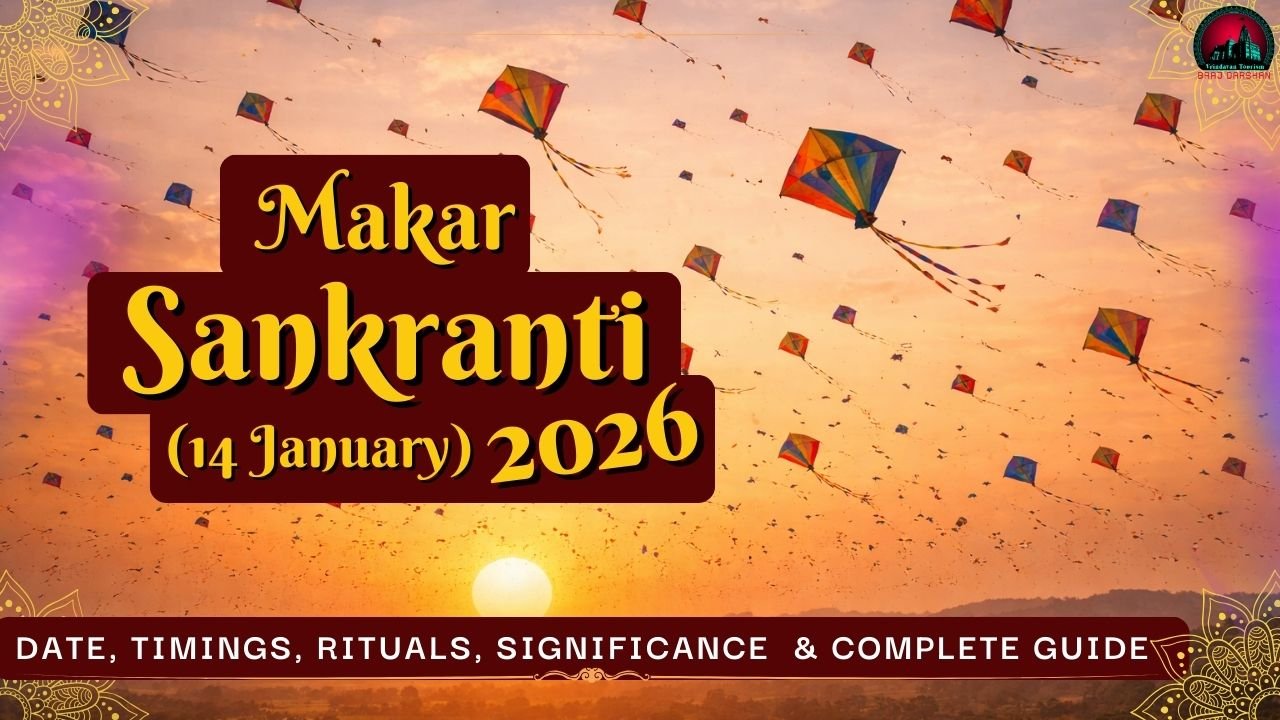
Makar Sankranti 2026 will be celebrated on 14 January 2026 (Wednesday), marking the highly auspicious transition of the Sun into Makara Rashi (Capricorn). Officially, the moment of Sankranti is in the early morning and the whole day is therefore especially suitable for holy baths, Surya Arghya, charity (daan), and spiritual rituals.
Makar Sankranti is one of the major Hindu festivals as it marks the beginning of Uttarayan, the Sun's northward journey, which is said to be a time of positivity, growth, and new beginnings. Most Hindu festivals are based on the lunar calendar and are, therefore, movable, but Makar Sankranti is based on the solar calendar and thus has a fixed date every year. The festival is celebrated by millions of people across India in different regional ways and is a perfect blend of spiritual worship, change of season, and cultural harmony that makes Makar Sankranti 2026 very special and highly respected.
Makar Sankranti 2026 Date & Day
Makar Sankranti 2026 will be celebrated on Wednesday, 14 January 2026. This sacred Hindu festival commemorates the time when the Sun enters Makara Rashi (Capricorn) thus marking the beginning of Uttarayan, the Sun's northward journey, which is highly auspicious in Hinduism.
Makar Sankranti 2026 Date & Timings
- Makar Sankranti Date: 14 January 2026
- Day: Wednesday
- Sankranti Moment (Sun enters Capricorn): 03:13 PM IST
- Punya Kaal Timing: 03:13 PM 05:45 PM IST
- Maha Punya Kaal Timing: 03:13 PM 04:58 PM IST
These timings are considered ideal for holy baths, Surya Arghya, puja rituals, and charity (daan).
Why Makar Sankranti Date Is Almost Fixed Every Year
Most Hindu festivals are lunar-based whereas Makar Sankranti is a solar festival. The festival is observed exactly when the Sun moves from the zodiac sign of Sagittarius to that of Capricorn, an astronomical event that takes place almost on the same date annually. Due to this solar calculation, Makar Sankranti is commonly on 14 January (for sure sometimes 15 January), thus making it one of the very few Hindu festivals with an almost fixed yearly date.
Why Makar Sankranti Is Celebrated (Mythological & Seasonal Significance)
- Makar Sankranti is celebrated based on profound mythological and natural symbolism. According to Hindu tradition, Bhishma Pitamah chose to leave his mortal body during Uttarayan, as it is believed to grant liberation. Another story tells of the day when Lord Surya pays a visit to his son Shani Dev, which is understood to signify the coming together of harmony, forgiveness, and the renewal of relationships.
- In essence, the holiday is a manifestation of light vanquishing darkness, knowledge overcoming ignorance, and hope prevailing over despair. It also serves as a seasonal marker of the end of winter and the start of the harvest time, which naturally brings to the homes an atmosphere of thankfulness, well-being, and happiness. It is this special mixture of spirituality and nature that makes Makar Sankranti not only a deeply significant but also a very popular festival.
State-wise Makar Sankranti Celebrations across India
- Uttar Pradesh & North India: Worshippers take a sacred dip (Ganga Snan), cook khichdi, and distribute food, clothes, and sesame to the needy.
- Gujarat: Marked as Uttarayan, the main highlight of the day is the spectacular kite-flying festival which is a symbol of joy and freedom.
- Maharashtra: The main activity is the exchanging of tilgul (sesame sweets) along with greeting each other with words of harmony and sweetness.
- Tamil Nadu: They celebrate the festival as Pongal which is a four-day harvest festival during which the Sun God and nature are praised for their benevolence.
- Assam: The festival is called Magh Bihu, during which the end of the harvest is celebrated by organizing community feasts and bonfires.
- Rajasthan & Madhya Pradesh: Kite flying, charity, and the consumption of traditional foods are the main highlights of the festivals.
- Punjab & Haryana: They join hands with Lohri, a festival that celebrates the harvest, the warmth of the bonfire, and the joyous coming together of the family.
Makar Sankranti Rituals & Traditions (Step-by-Step)
- Get up early and have a sacred bath, if possible at the time of sunrise.
- While chanting the mantras, give water to the Sun (Surya Arghya).
- Light incense and lamp, offer prasad, and do a simple home puja.
- Give away sesame, jaggery, food, and clothes to the poor.
- Offer food to cows, birds, and animals, a gesture that indicates kindness and thankfulness.
What to Donate on Makar Sankranti (Daan Importance)
- Til(Sesame): It is a symbol of purity and is also considered as a protective element.
- Gur(Jaggery): It is the symbol of sweetness and positive vibes.
- Khichdi: It is linked with the idea of nourishment and prosperity.
- Warm clothes: You know it is the time to keep the winter away.
- Food grains: It signifies the state of being full and grateful at the same time.
👉 Charity on Makar Sankranti is said to bring a hundredfold of spiritual merits (punya) because this act is done during the Sun's very fortunate Uttarayan phase.
Makar Sankranti Special Foods & Sweets
- Til-Gur Laddoo: Promotes warmth and unity in winter.
- Khichdi: Staple Sankranti dish in North India.
- Pongal: Sacred offering made from freshly harvested crops.
- Chikki: Popular sesame-jaggery sweet across India.
- Gajak: Traditional winter sweet enjoyed in northern regions.
These foods reflect seasonal wisdom, health benefits, and cultural diversity, making Sankranti a true festival of nourishment and joy.
Makar Sankranti vs Lohri vs Pongal (Difference Explained)
Despite the tendency to unite them, Makar Sankranti, Lohri, and Pongal are unique celebrations of various parts of India, and each of them has its cultural and ritual meaning.
Date Comparison
- Makar Sankranti: 14 January (solar festival)
- Lohri: 13 January (eve of Makar Sankranti)
- Pongal: 14-17 January (four day harvest festival)
Regional Meaning
- Makar Sankranti: Pan-Indian celebration of the Sun entering Capricorn and the beginning of Uttarayan.
- Lohri: I celebrated it in Punjab and Haryana, primarily about harvest, warmth and community building.
- Pongal: This is a big Tamilian festival in which they give thanks to the Sun God and nature as well as to the abundance of agriculture.
Ritual Differences
- Makar Sankranti: Holy bath, Surya Arghya, charity, sesame offerings.
- Lohri: Fire rituals, folk songs, giving peanuts and candy to fire.
- Pongal: Preparation of fresh rice using milk, Worship of the Sun, and honor to cattle and farmers.
Conclusion: Makar Sankranti 2026
The Makar Sankranti 2026 is a perfect blend of religious worship and changing the season, as the Sun is moving northwards in Uttarayan, the period of prosperity, optimism, and development. It is also the moment to be grateful to nature, show charity, and start new enterprises with hope and belief. The festival is celebrated throughout India in various ways but it reminds us of unity and regeneration and the balance between tradition and the rhythms of life. Through faithfulness and the practice of rituals and spreading happiness through kindness and generosity, Makar Sankranti still awes millions of people to embrace new starts with purity, gratitude, and spiritual power.
📞 Call Us: +91 7078723132 | +91 9557104160
📲 WhatsApp Us: +91 7078723132 | +91 9557104160
🌐 Visit Our Website: Vrindavan Mathura Tourism | Trip My Vrindavan
🔗 Explore All Our Tour Packages
🔗 Read Our Blogs for Travel Inspiration
See All Google Reviews → Click Here
FAQs – Makar Sankranti 2026
Q1. Is Makar Sankranti on 14 or 15 January in 2026?
In 2026 Makar Sankranti will be celebrated on 14 January (Wednesday).
Q2. What is the best time for puja on Makar Sankranti 2026?
The Punya Kaal begins at 03:13 PM and goes on till the sunset and Maha Punya Kaal between 03:13 PM and 04:58 PM, which is the most auspicious.
Q3. Why is sesame (til) eaten on Makar Sankranti?
Sesame is the shield of warmth during the winter months and purity, safety, and good things. It is considered to take away negativity and bring blessings spiritually.
Q4. Is Makar Sankranti celebrated on the same date every year?
Yes, Makar Sankranti is based on the solar calendar and therefore, it either happens on 14 January annually (and in some cases, 15 January).
Q5. Can we keep a fast on Makar Sankranti?
Yes, fasting is also regarded as auspicious and is practiced with charity, prayers and worship of Surya.
Q6. What should be donated on Makar Sankranti?
Donations such as til, jaggery, food grains, warm clothes and khichdi are thought to be very sacred during this day.